

Mind the gap: connecting AI innovation to public value
A Science and Public Policy paper argues that public demand for AI and the path of AI innovation have diverged, and sets out what would close that gap.


The AI Adoption programme asks how organisations and public institutions can take up AI so that it meets real needs, remains under democratic control, and preserves the human judgement on which institutional accountability depends. The work combines three strands that have often been pursued separately: public dialogue about what people want from AI; partnership with practitioners who are deploying it; and theory that explains when adoption strengthens an institution and when it silently undermines it.
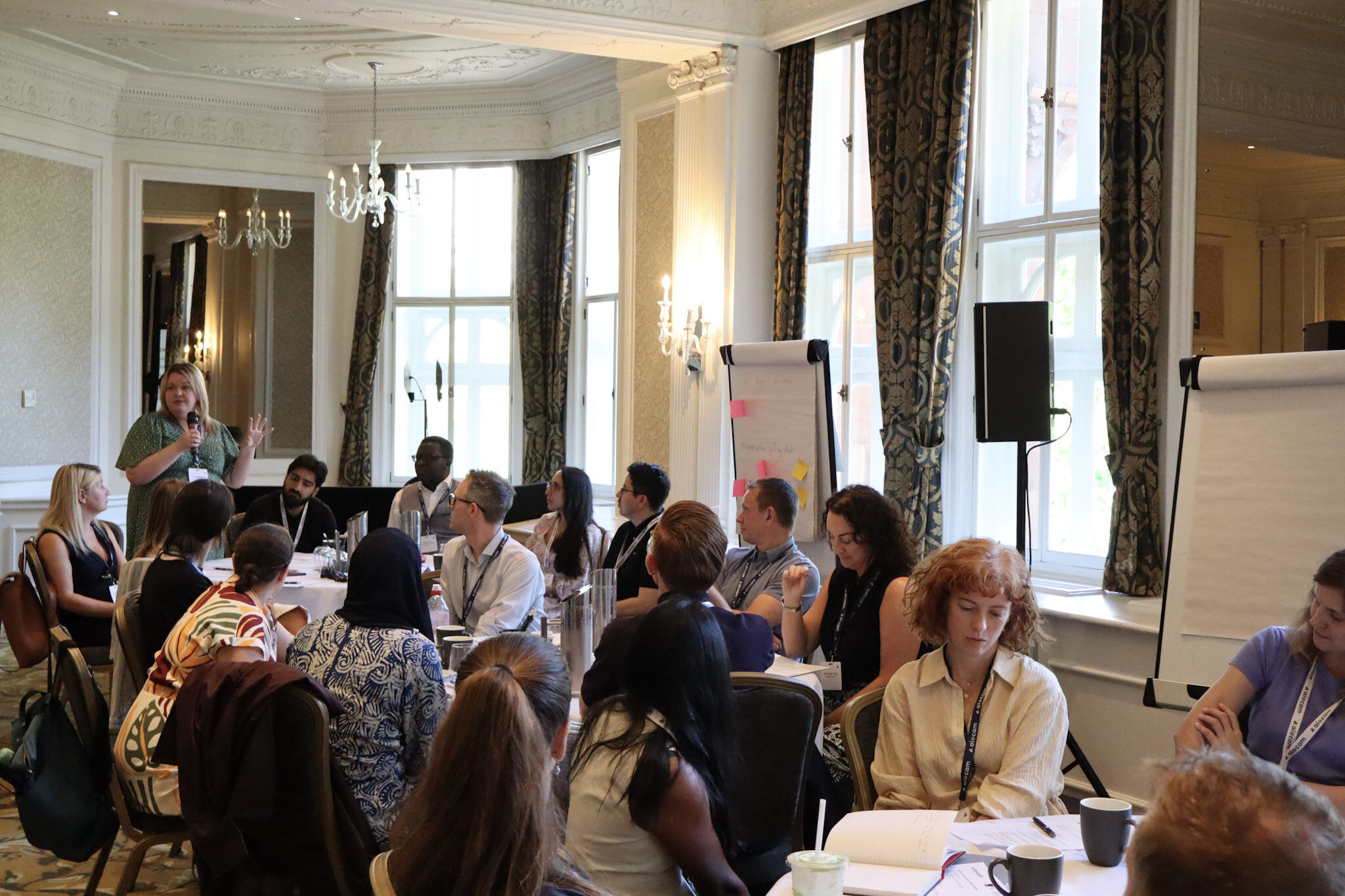
Public dialogues have produced clear demand signals for AI that improves shared wellbeing while remaining under democratic control. Much of the innovation system has advanced along another trajectory. Closing that gap is a central motivation of the programme — developed in Mind the gap (Lawrence and Montgomery, 2026) and in ai@cam’s public dialogue on AI in local government. Dialogue is not an afterthought to technical deployment; it shapes what counts as a successful adoption.
Field access comes through ai@cam’s Local Government AI Accelerator, funded by the Ministry of Housing, Communities and Local Government. The Accelerator pairs Cambridge researchers with councils on proof-of-concept deployments in public services, and embeds public input throughout — building directly on the local-government dialogue findings. It is a structured setting in which adoption can be studied in real time rather than only retrospectively, and in which institutional infrastructure for dialogic, absorptive, and distributive capacity can be tested.
Earlier institutional and policy work at ML@CL — data trusts, national AI strategy advice, and citizen dialogue on data governance — provides the longer lineage for this strand.
A parallel Italian strand is planned with LUISS Guido Carli University in Rome, building on Neil Lawrence’s visiting professorship there. The intention is to develop teaching modules and executive education workshops on AI adoption as a methodology for eliciting organisational information topographies, and to open comparative case work with Italian institutions alongside the UK public-sector cohort.
A second strand is theoretical and still emerging. One focus is the interface junction: handoffs, escalations, and translation points where human and machine communication regimes meet. Mapping those junctions — and asking whether deployment relieves a bottleneck or bypasses a load-bearing human attenuator — connects adoption practice to information topography.
A related idea is model minimisation: ensuring that models are just large enough to deliver on their task. The motivation is the big model paradox: as models grow more complex we can come to believe we have a high-fidelity representation of reality, while the complexity itself moves the system beyond human understanding and still falls short of the world it claims to capture. The Good Regulator theorem supplies the InfoTop connection. If humans remain the regulators of agentic systems, those systems must stay modellable by the people who own the risk. Model minimisation is not anti-capability; it is the condition under which institutional judgement remains solvent. Automating past that condition without preserved escalation paths accrues agentic debt.
These ideas are developed in talks on judgement and model minimisation and in the mathematical programme of Information Topography. The Good Regulator theorem of Conant and Ashby seems like a promising starting point for this theory.
AI Adoption is the field and policy pillar of the InfoTop agenda. It draws quantities and instruments from Information Topography, tests engineered analogues of organisational interventions in Interfaces, and returns anomalies from real institutions — and from public dialogue — to refine both.
28 July 2026
A Science and Public Policy paper argues that public demand for AI and the path of AI innovation have diverged, and sets out what would close that gap.

12 May 2026
Neil Lawrence’s FT letter, responding to reporting on Visma, argues that markets and policy err when they treat AI as one centralised deployment rather than many local workflows.
29 April 2026
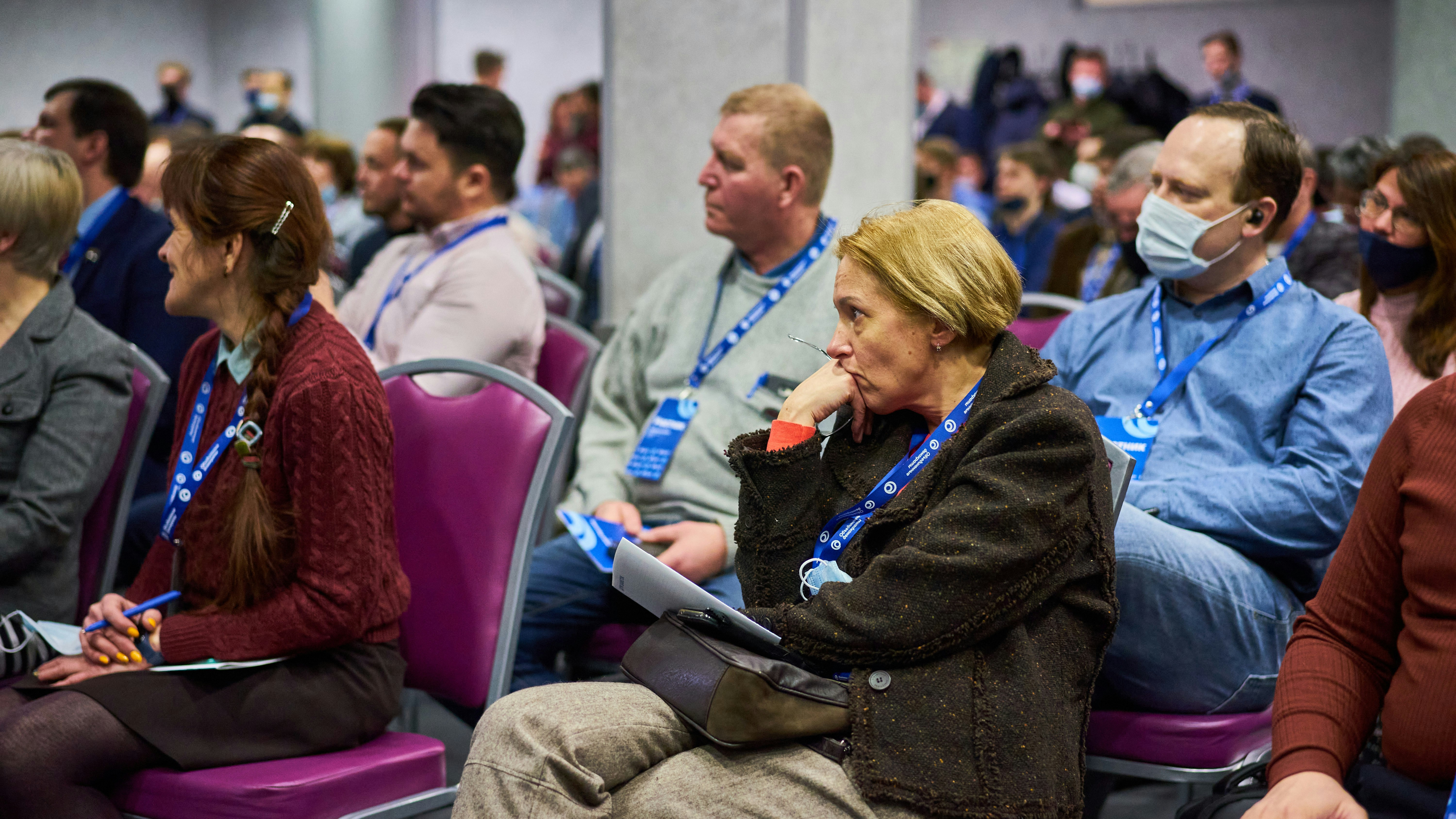
ai@cam has announced six council partnerships, funded by MHCLG, to try AI on operational problems in local public services.
Science and Public Policy, :
Allen Lane:
AI Council:
Future Directions for Citizen Science and Public Policy, CSaP:
The Data Trusts Initiative: