Shannon Entropy and the Partition Function
FW26, William Gates Building
This Session
- Shannon \(H\); Boltzmann \(S = kH\)
- Arithmetic coding → Dasher: \(H\) as bits, \(p\) as the next letter
- Partition function as a generating function
- Scaffolding: \(I(X;Y)\), capacity, DPI (statement)
Lecture 1–2 counted human communication in Shannon’s bits — a bottleneck on how fast thought can leave the body.
- Today: derive \(H\) and connect \(S = kH\)
- The bottleneck remains; we gain the measure behind the bit
Information, energy and intelligence course notebook setup
Shannon Entropy
Information Theory and AI
- Claude Shannon developed information theory at Bell Labs
- Information measured in bits, separated from context
- Makes information fungible and comparable
Fungibility of Information
Information Transfer Rates
- Humans speaking: ~2,000 bits per minute
- Machines communicating: ~600 billion bits per minute
- Machines share information 300 million times faster than humans
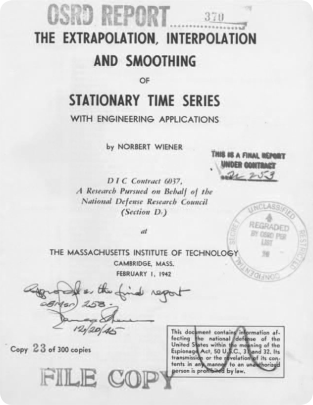
Brownian Motion and Wiener
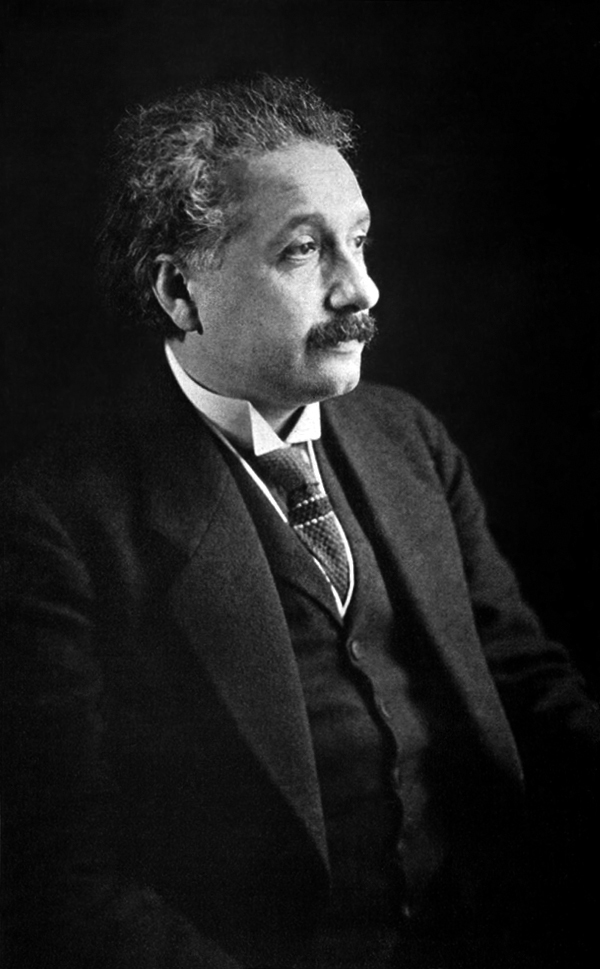
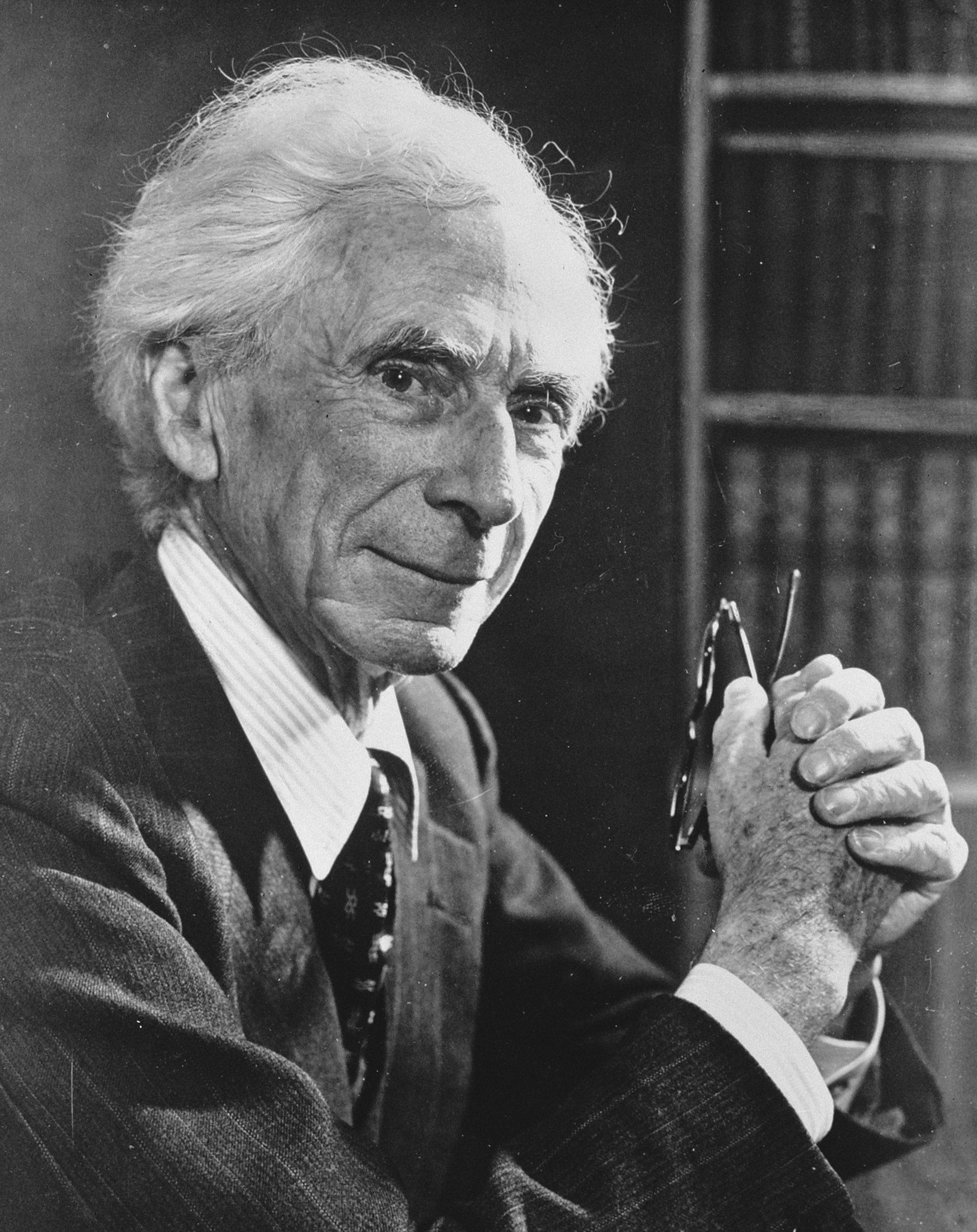
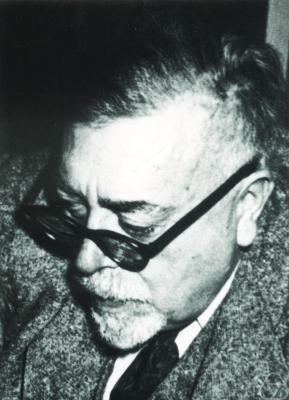
Brownian Motion
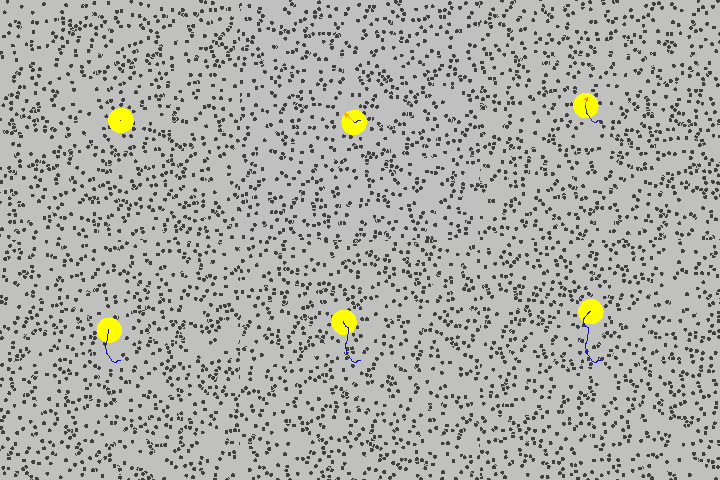
Stochasticity and Control
Shannon Entropy from Axioms
Shannon asked: what number measures uncertainty in a discrete distribution \(p=(p_1,\ldots,p_n)\)?
- Continuity; maximum at uniform; additive for independent parts
- Result: \(H(p) = -\sum_i p_i \log p_i\)
Binary Entropy
Arithmetic Coding and Dasher
Arithmetic Coding
- Compression entails probabilistic modelling (MacKay, 2003, p. Ch.~6)
- Predict next symbol → encode cheaply when the prediction is sharp
- Modelling separated from the bit-string construction
The guessing game
- Human predicts next character (MacKay Sec.~6.1)
- Record guess-rank → skewed alphabet → easy to compress
- Decoder: identical twin, stopped after the same number of guesses
From guesses to intervals
- Model supplies \(P(x_n \mid x_{<n})\) — any context-dependent distribution
- Subdivide \([0,1)\) so each symbol interval has length equal to its probability
- Code = any bit-string whose dyadic interval ⊆ message interval
- Length of final interval \(= P(\text{message}\mid\text{model})\)
Train a Predictive Model
Algorithm 6.3 in Code
Export for Dasher
- Retrain on another corpus → rewrite JSON → reload Dasher
- Box heights follow your \(P(c \mid \mathrm{context})\)
Dasher: Arithmetic Coding as Interface
- Letters sized by \(P(\texttt{char} | \texttt{context})\). A large target = common = cheap
- Move pointer right of centre: boxes enlarge and stream left
- Move pointer left of centre to zoom out / unwrite
- Character written when its box crosses the centre crosshair
- Ease of selection \(\propto\) probability \(\propto\) 1 / information cost
DASHER screen height ∝ probability · boxes stream left across the crosshair
bits: 0.0 avg: — b/ch H(next): —
Click or Space to Go/Pause · Copy extracts text · pointer right zooms · left zooms out · Backspace unwrites · Escape resets
The Partition Function
\(Z\) as Generating Function
The canonical ensemble from the bath: fix \(\beta\) and let the small system fluctuate.
- \(Z(\beta) = \sum_i e^{-\beta E_i}\)
- \(U = -\partial_\beta \log Z\), \(F = -\beta^{-1}\log Z\), \(S = \beta(U-F)\)
- Equilibrium = on the \(\beta\)-manifold; finite-time driving leaves it
- \(U = -\partial_\beta \log Z\)
- \(F = -\beta^{-1}\log Z\)
- Bath justifies the canonical ensemble
Discrete Shannon Entropy Is Bounded
Week 3 derived Shannon entropy for discrete \(p=(p_1,\ldots,p_n)\).
- \(0 \le H(p) \le \log n\) on \(n\) outcomes
- Maximum at uniform; zero on a delta
- Code interpretation: average length cannot beat \(H\)
KL Divergence
Comparing two distributions needs a functional that is always sensible.
- \(\text{KL}(p\|q) = \sum_i p_i \log(p_i/q_i)\) discrete; \(\int p\log(p/q)\,dx\) continuous
- Always \(\text{KL}(p\|q) \ge 0\); zero iff \(p = q\) (same support)
- Extra surprise when \(q\) stands in for \(p\) — not a metric, but a directed cost
Differential Entropy Is a Different Object
Gaussian channel uses \(-\int p\log p\) — differential entropy.
- Can be negative; not bounded below
- Not a code-length bound — compare distributions with KL.
Scaffolding, Not Outcomes
Chain Rule, Mutual Information, Capacity
Four results we will need later — stated, not proved today.
- Chain rule: \(H(X,Y) = H(X) + H(Y|X)\)
- Mutual information: \(I(X;Y) = H(X)-H(X|Y) = H(X)+H(Y)-H(X,Y)\)
- Capacity: no rate above \(C\); achieving \(C\) requires the capacity-achieving \(p(x)\)
- Data processing: if \(X\to Y\to Z\) is Markov, \(I(X;Z)\le I(X;Y)\)
- No-go: \(R \le C\); processing cannot create information
- Prescription: the \(p(x)\) that achieves \(C\)
- Week 8: prove DPI; information bottleneck as the prescription on \(I\)
Three Framings, First Pass
- Same \(H\); three operational assumptions
- Week 3: one bit \(\leftrightarrow\) \(k_B T \ln 2\) joules (Szilard, Landauer)
- Synthesis is week 4
Define This Week
- Why is entropy a sensible measure of information?
- Equilibrium versus non-equilibrium? (first cut)
- Channel capacity? (statement)
- Mutual information? (definition)
After This Lecture
- Next: Maxwell and Landauer (3 November)
- LLM: is Shannon entropy a bound or a recipe?
Further Reading
Sections 1–6 of Shannon (1948)
Chapters 1–4; Chapter 6 of MacKay (2003)
Chapter 2 of Cover and Thomas (1991)
Sections 1.2.3–1.2.4 and 3.2.4 of Welling et al. (2026)
Chapter 16 of Callen (1985)
Chapter 7 of Cover and Thomas (1991)
Chapters 8–10 of MacKay (2003)
Thanks!
- company: Trent AI
- book: The Atomic Human
- twitter: @lawrennd
- The Atomic Human pages
, . * newspaper: Guardian Profile Page * blog: http://inverseprobability.com